
Follow-up team memberReady
Drafts ready For financial advisors
The advice is your job. The prep before a meeting, the follow-up after it and the reminders in between are what fill your evenings. An AI assistant for financial advisors should carry that routine work, and Operly gives you team members that do. Your firm’s rules still apply to everything you send.
Your income depends on trust, deadlines and every client feeling looked after.
Also finds you new clients. See how →Try it: find your next clients
Describe your ideal customer once and set it as a routine. Your team members research on a schedule and bring you prospects with a drafted introduction for each. You choose who to contact, and each introduction is drafted for you to read. This is an example with made-up people.
 Chief of staffYour team
On it! I found 3 clients worth a look, each with a drafted introduction. Keep the ones you like.
Hi Dr. Nair, congratulations on opening your practice. The first year brings a lot of financial decisions. If it would be useful, I am glad to set up a short conversation about how to think through them.
Hi Marcus, congratulations on the promotion. A move and a new role often change the financial picture. If you would like a second set of eyes, I offer a short introductory conversation.
Hi Ellen, I saw you are thinking about retirement. Many people find it helps to talk through the timeline early. I would be glad to offer a short conversation, no obligation.
Drafts stay with you until you send them.
Try it: after-meeting follow-up
Say the request once. Your team members draft a short follow-up for each client you met this week, based on your notes. Pick a client to see the draft, then approve it or change it yourself. This is an example with made-up clients.
Chief of staffYour teamDraft a follow-up for each client I met with this week.
On it! The drafts are ready for you to read. Pick one to open it.
This week’s meetings
Hi Hannah, thank you for a thoughtful review today. As we discussed, I will pull together the questions you raised about your goals so we can go through them at our next meeting. Please send me anything you would like me to look at first.
Drafts stay with you until you send them.
Sound familiar?
Meeting prep that starts ten minutes before the call
Follow-up notes that wait until the weekend
Client requests that hide in a crowded inbox
What you can hand off
These are the kinds of requests financial advisors give their chief of staff. Your team members do the work and you review the result.
“Every week, look for professionals who may want a financial plan and draft a short, friendly intro for each.”
Describe who you want to reach and set it as a routine. It researches on a schedule and drafts introductions for you to review. You choose who to contact, and you stay responsible for what your firm allows you to send.
“Write a prep note whenever a new client meeting lands on my calendar.”
Write the routine in plain English: when a new calendar event has attendees, draft a prep note from the title, attendees and time. It does not research the web, so the note stays tied to what is on the event.
“Draft a follow-up for each client I met with today, from my notes.”
A follow-up team member works from the notes you share and drafts a note for each client. Ask for drafts and you read each one before anything goes out.
“Turn client emails into tasks with due dates.”
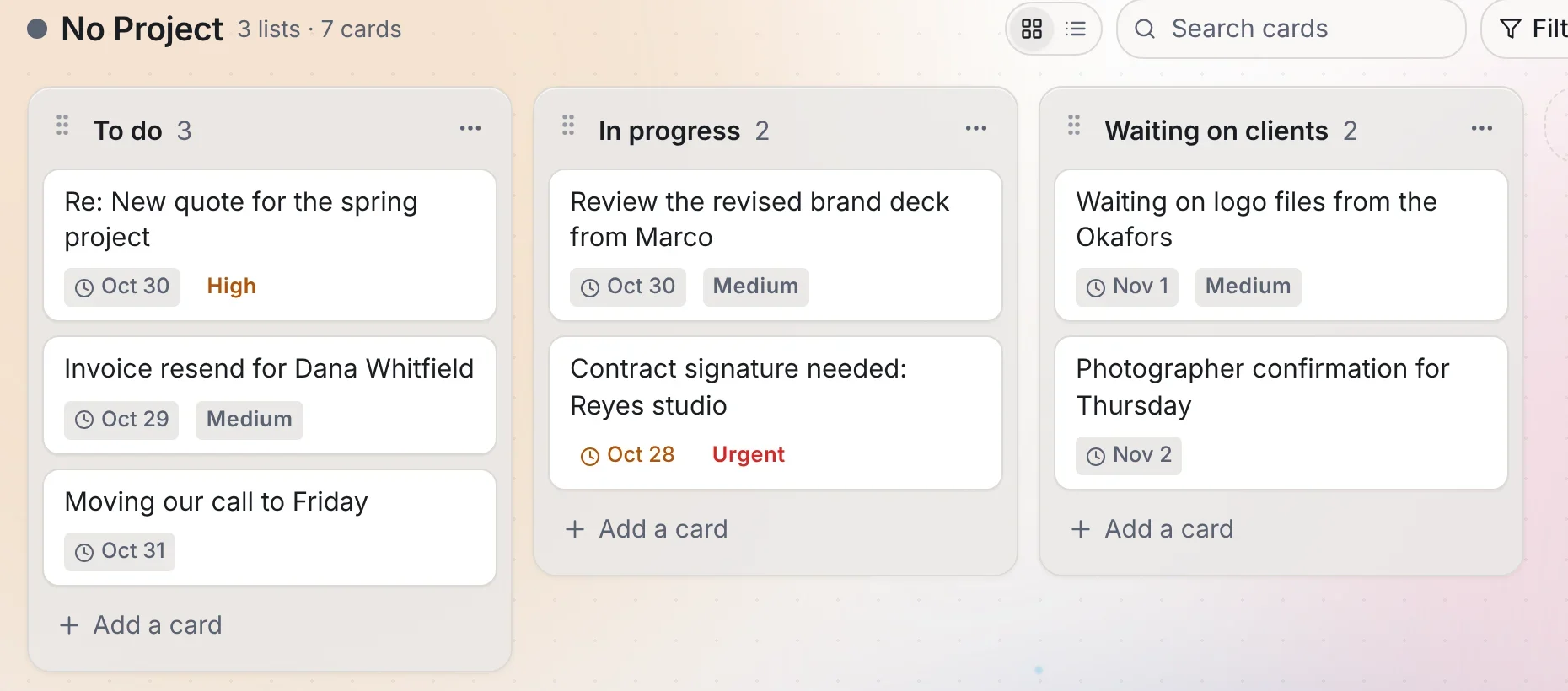
An inbox routine can turn a request in a client email into a task with the date attached, so it shows up on your board.
“Every Monday, draft a short check-in for clients whose review is coming up.”
Keep review dates in a simple document. A routine can read it on a schedule you set and draft a short note for each client who is due.
“Turn my notes on the year-end checklist into a short article and two posts.”
Studio drafts blog posts and social posts from your notes and keeps them in your library. Your firm’s review process still applies before anything is published.
One request, start to finish
An illustration of how one request can play out, not a customer story.
“Prep me for tomorrow’s client reviews, draft follow-ups for today’s meetings and sort my inbox.”
Prep notes get drafted from tomorrow’s calendar, follow-ups from your notes, and client email is sorted into requests and everything else.
The notes and drafts are waiting. You adjust a few lines, check them against your firm’s rules and send.
What stays with you
Your advice, your recommendations and every client conversation. Operly drafts and organizes routine work. It is not a compliance or recordkeeping system, so your firm’s rules on client communications, records and client data still apply, and you stay responsible for what goes out.
What your team takes on
The advice is yours. The routine work around it is what fills the evenings. Your team members take that part, and your firm’s rules still apply to everything you send.
A steady pipeline takes steady outreach, and it is the first thing to slip during busy season.
With OperlyDescribe who you want to reach and set it as a routine. It researches on a schedule and drafts an introduction for each. You choose who to contact and what your firm allows you to send.
Pulling the client’s context together starts ten minutes before the call.
With OperlyA routine can draft a prep note whenever a new calendar event has attendees, from the title, attendees and time.
A meeting ends and the note waits behind the next one.
With OperlyGive it your notes. A follow-up is drafted for each client for you to adjust and send.
Requests hide among newsletters and notifications and turn into things you forgot.
With OperlyPlain-English inbox rules sort the mail. Requests become tasks with dates, and replies are drafted for you.
Clients drift when they only hear from you at review time.
With OperlyKeep review dates in a simple document. A routine reads it on a schedule you set and drafts a short check-in for clients who are due.
Staying visible means writing even when the calendar is full.
With OperlyA content team member drafts articles and posts from your notes. Your firm’s review process still applies before anything is published.
Meetings, deadlines and promises live in different places.
With OperlyA morning briefing lists the day’s meetings, what is overdue and your top priorities.
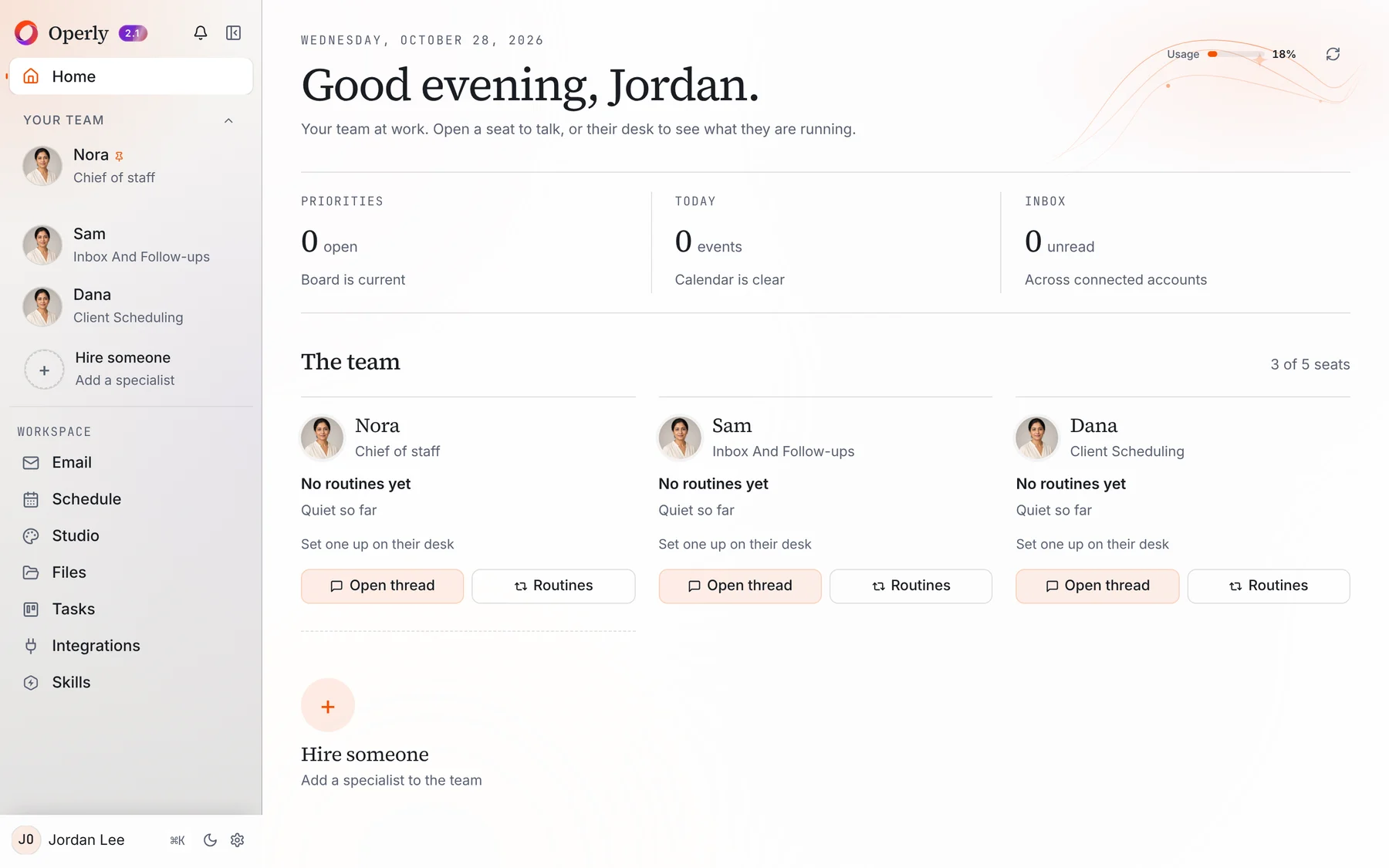
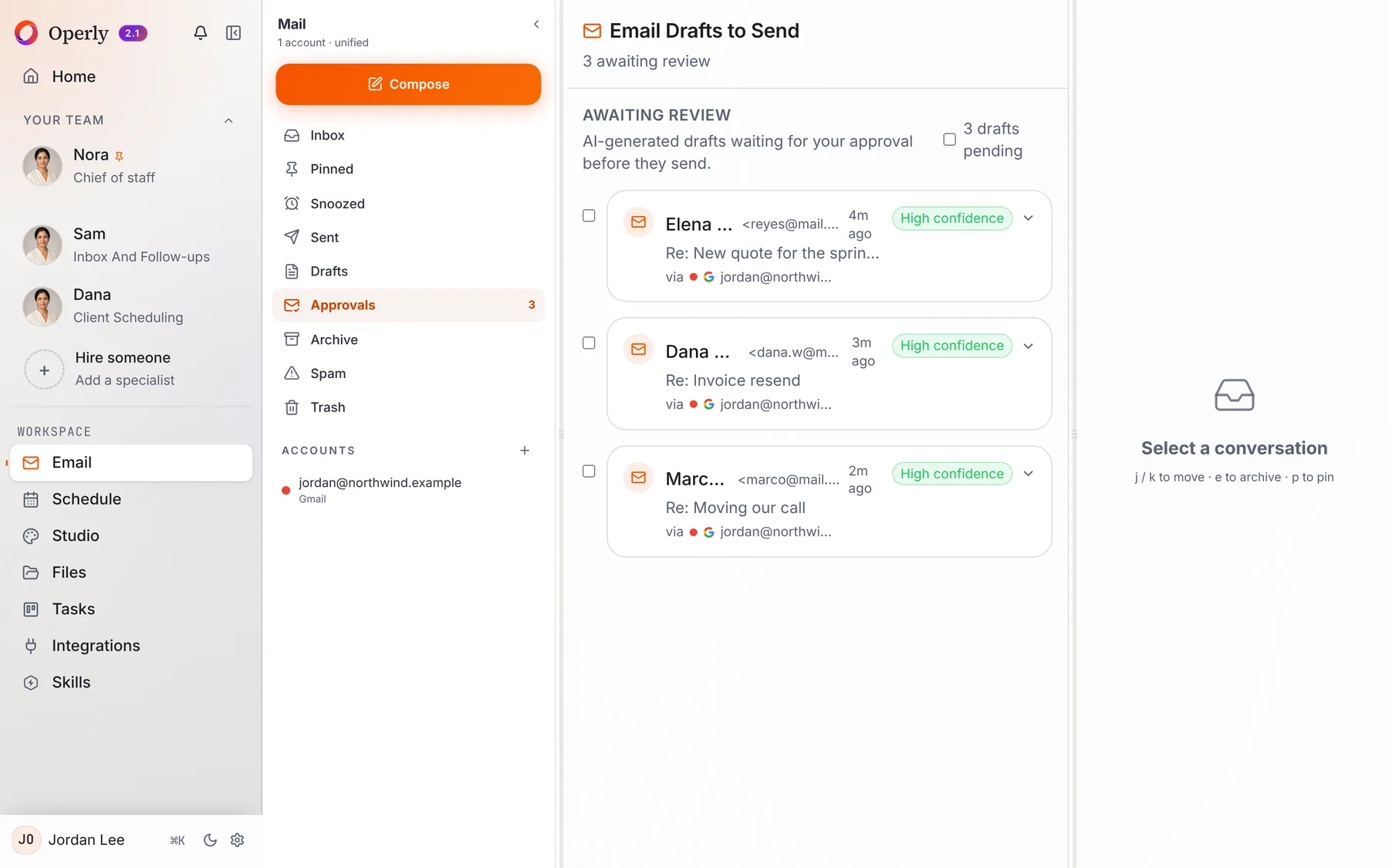
In the app
Real screens from Operly. The workspace and every name in them are made up.
Operly does not make or review compliance decisions. Your firm’s rules on communications, recordkeeping and client data still apply, so check with your compliance team before you use any tool with client information.
No. Operly helps with the routine work around your clients. Advice and recommendations stay with you.
Yes. Ask your team members for drafts and read each one first. Your team carries out the sends you ask for, so ask for drafts when you want to read first.
Pick one thing you keep doing yourself, ask your chief of staff to handle it, and see how it feels.
Start delegating