
If work keeps stopping until you touch it, you’re the bottleneck. Not because you’re doing it wrong, but because nothing else is set up to carry it. The fix isn’t working faster. It’s finding out what’s waiting on you, and deciding who or what carries it instead.
This post covers how to find the waiting in one week, how to sort it into calls and carrying, what a handoff needs, and how to set it up in Operly without losing the final say.
What does it mean to be the bottleneck?
It means the path of work runs through you. An email arrives, you read it, you decide, you make the task, you send the context, you check the calendar. Each tool did its job. The work only moved because you carried it across.
Consultants describe the same pattern in different words. Predictable Profits says founders tend to get stuck in three places: sales, delivery and decisions. ActionCOACH says it’s a structural problem rather than a personality flaw or a sign you hired the wrong people. Too Many Hats makes a sharper distinction: delegating a task is different from transferring ownership of a kind of decision to a named person.
All three are written for owners who have people to hand work to. If you’re solo or running a very small shop, you can’t hire your way out this month. That’s where an AI team member comes in, but only for part of the problem.
How do I find what’s waiting on me?
Don’t guess. Count.
ActionCOACH recommends a one-week audit: log every task, decision and interruption for seven working days, in real time rather than from memory. You can do a lighter version that only catches the waiting.
What it was: [for example, a client asked for a quote]
Where it came from: [email, calendar, a person, a file]
What I did: [read it, made a task, sent context, replied, decided]
Did it need my judgment? [yes / no]
Keep it where you’ll actually use it: a note on your phone is enough. After five working days you’ll have a list, and the last line tells you where to look first.
Which of it should I hand off?
Sort every line into one of two piles.
- Calls. It needed your judgment: a price exception, a sensitive reply, a yes or no that costs money if it’s wrong. Keep these.
- Carrying. You just moved something along: read the email, copied the subject into a task, forwarded the invite, wrote the same prep note again. These are the ones to hand off.
Most owners find the carrying pile is bigger than expected. Too Many Hats makes the related point that delegating tasks alone tends to snap back, because the decisions behind them were never reassigned. Your calls stay yours. The carrying around them is what can move.
What does a good handoff need?
Three things written down, plus one that stays with you.
Job: [for example, turn client requests into tasks]
Owner: [a named person or team member]
Trigger: [what starts it: a new email, a calendar event, a time of day]
Stays with me: [what I still approve before anything goes out]
If you can’t fill in all four, the job isn’t ready to hand off yet. That’s useful information, not a failure.
How do I set it up in Operly?
In Operly, the owner can be an AI team member. Choose Hire someone in the sidebar.
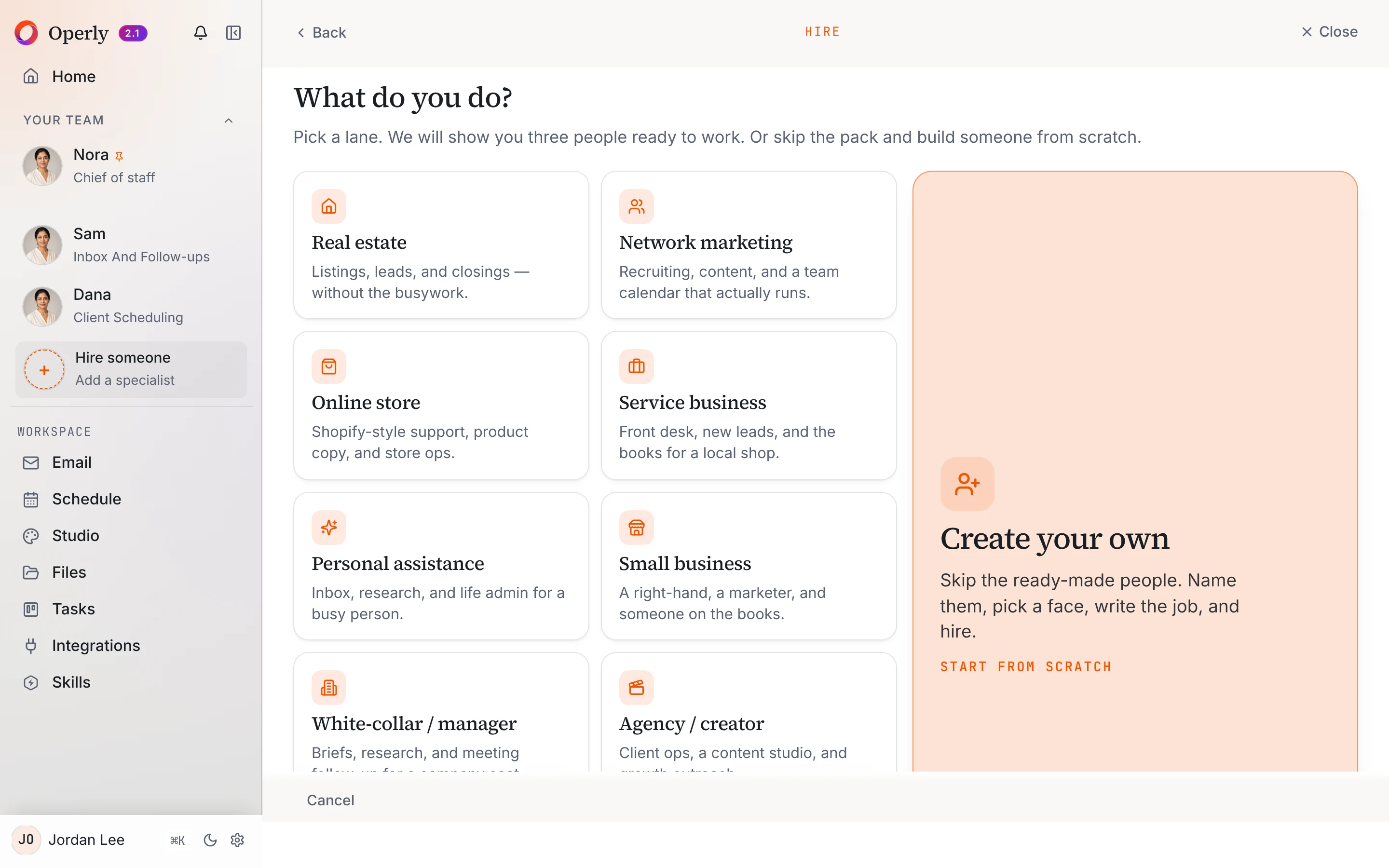
Pick the kind of work you do and Operly shows three people ready to start. Or choose Create your own: name them, pick a face, write the job, and hire.
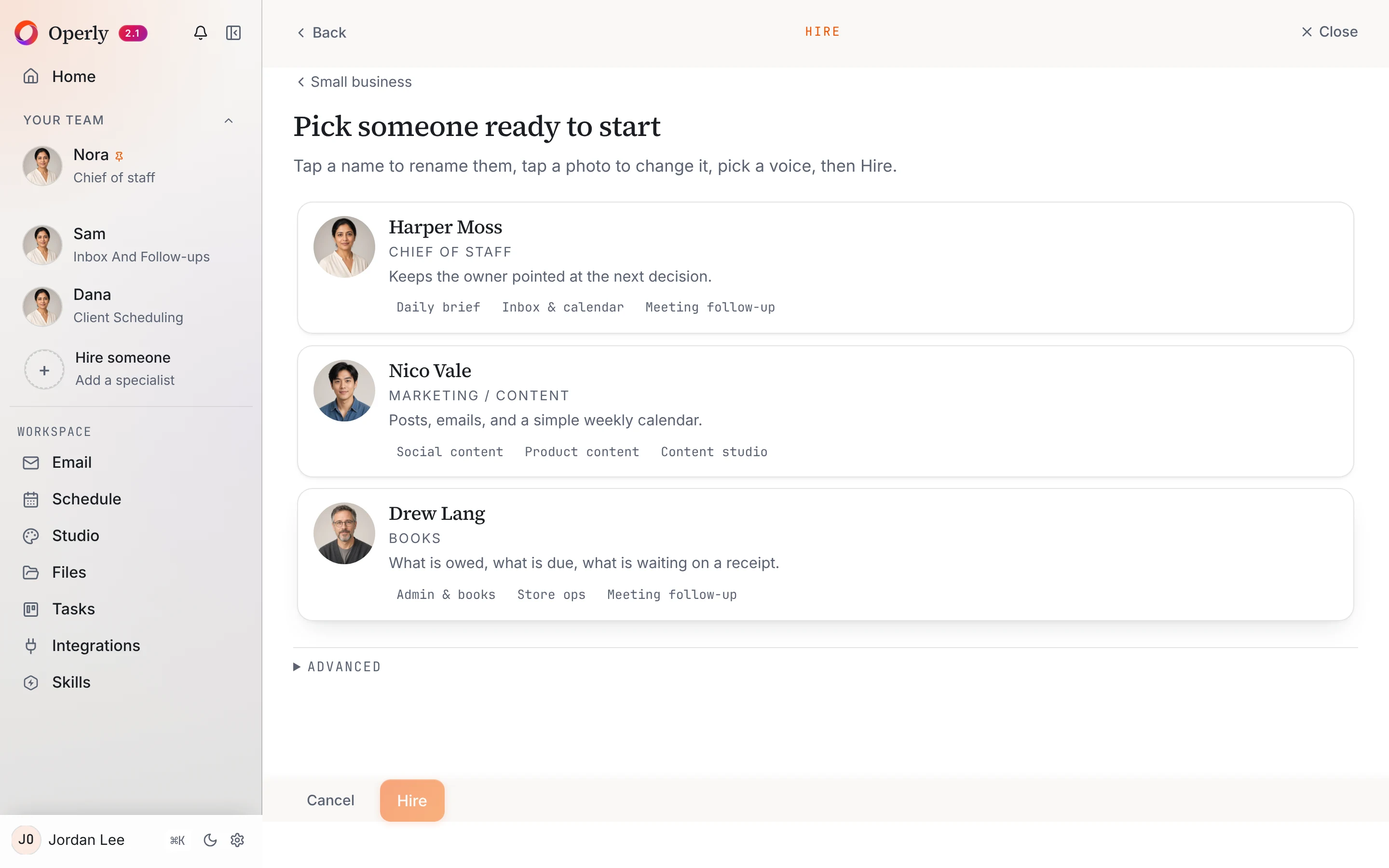
The screen says to tap a name to rename them, tap a photo to change it, pick a voice, then Hire. In the small business set, the chief of staff is described as the one who keeps the owner pointed at the next decision, with a daily brief, inbox and calendar, and meeting follow-up.
Then give each one a trigger from your handoff list.
- Emails that become tasks: how to turn emails into tasks automatically.
- A morning brief instead of a morning scramble: how to automate a daily morning briefing.
- Prep when a meeting lands: how to prep for meetings automatically with AI.
- Rules for the repeat jobs: AI automation rules.
The last line of your handoff, “stays with me,” is where you set the limits. Your team carries out the sends you ask for, so ask for drafts when you want to read first.
Pick the most repeated line from your tally. Name an owner, set the trigger, and keep the approval.
What should I keep for myself?
Keep the calls. Pricing exceptions, sensitive messages, final approvals and anything where being wrong is expensive deserve your attention. The goal isn’t to disappear from the business. It’s to stop being the courier for it.
Your next step
Start the tally on Monday. On Friday, circle the three most repeated carrying lines. Fill in one handoff and set it up. Then run the tally again the next week and see whether the same lines show up. If they do, you picked the wrong owner or the wrong trigger. If they don’t, pick the next line. For where this fits next to a human assistant, read AI vs a virtual assistant.

We build Operly, an AI team for business owners. Your chief of staff hands the work to team members who follow up, draft and organize, and you keep the decisions. About Operly · Watch the demo