Hand your AI executive assistant the prep. Keep the decisions. That’s the whole split. It can take the first pass at your inbox, your calendar and your follow-up, so you stop starting every day from zero. It can’t make the calls that cost you money or trust.
Here’s the plain version: what an AI executive assistant does, six jobs to hand it, what to keep, how it compares with a person, and how Operly does each job, with real screens.
What does an AI executive assistant do?
It does the written, repeatable part of an executive assistant’s week. It reads your email, looks at your calendar and tasks, and gets things ready for you.
Most of the work falls into six jobs:
- Inbox. Sort it, star the people you can’t miss, archive the noise, draft replies.
- Calendar. Keep today and tomorrow in view, and put events on it.
- Meeting prep. A short note waiting before you walk in.
- Briefs. What’s due, what’s on, what to do first.
- Follow-up. Turn requests into tasks and remind you.
- Files and notes. Answer from your own documents so you stop re-explaining.
That’s an assistant with a job, not a box you type questions into. And whoever does the checking at the end should be you, quickly.
What can an AI executive assistant do for a business owner?
Start with the jobs that are easy to check and cheap if they’re wrong.
1. Sort the inbox and draft the replies. The first pass is the time-sink. Let it star clients, archive receipts and write a draft for the routine questions. You read, fix and send. For the full list of what to hand over and what to hold back, read what an AI email assistant should do.
2. Keep your calendar in view. Today’s events, tomorrow’s, and the one you need added. Ask for an event in plain words.
3. Prep your meetings. Who’s coming, when, and what it’s about, written before the invite turns into a scramble. Here’s how to prep for meetings automatically.
4. Write your brief. What’s due today, what’s overdue, what’s on your calendar and your top three priorities. A morning briefing works because it’s already waiting when you sit down.
5. Turn requests into tasks. “Can you send me the invoice?” shouldn’t live only in your head. A task with a due date is a promise you can see.
6. Answer from your files. Attach the contract, the price list or the brief, and ask your question against it.
You don’t need all six this week. What can I delegate to AI first has seven starter jobs and a four-question test for anything else.
What can’t an AI executive assistant do?
It can’t decide for you, and it can’t be in the room.
Keep these for yourself:
- Prices and quotes. One wrong number is now in writing.
- Complaints and bad news. Tone matters more than speed.
- Money, legal and contract questions. These are yours.
- First contact with someone important. You only get one first impression.
- Anything that carries your voice and your relationship. A draft can start it. The words should be yours.
And some jobs belong to a person because they happen off the screen: phone calls to clients, errands, anything in person, and the judgment a person builds from knowing your clients for years. In Operly, voice calls are you talking with your team member, on the Business plan.
It also works from what it can see: your connected email and calendar, your tasks, your files, and the notes you give it. If something lives only in your head, it doesn’t know it yet.
Can I check the result in about ten seconds?
If it’s wrong, is it cheap to fix?
Is it a draft or a note, rather than something that can’t be taken back?
Is there little emotion or relationship in it?
If all four are yes, hand it over. If not, ask for a draft and decide yourself.
What’s the difference between an AI executive assistant and a human one?
It’s a sorting job, not a contest.
A person is better at anything live or physical, at relationships built over time, and at knowing when a rule should bend. If a task needs a human voice, a human face or a human memory of your business, hire a person.
An AI executive assistant is better at the first pass on repetitive written work, at any hour, done the same way each time. It won’t get bored or forget. It also won’t know you the way a person does, so you still read what it writes.
Many owners end up using both. Start by writing down last week’s tasks and sorting them into three piles: give to AI, give to a person, keep. Our virtual assistant vs AI post walks through that sort.
How does Operly do this?
Operly is an AI team: a chief of staff you talk to, plus team members you give a job, such as inbox and follow-ups. They work inside your real email, calendar, tasks and files. The screens below use a made-up studio, Northwind Studio.
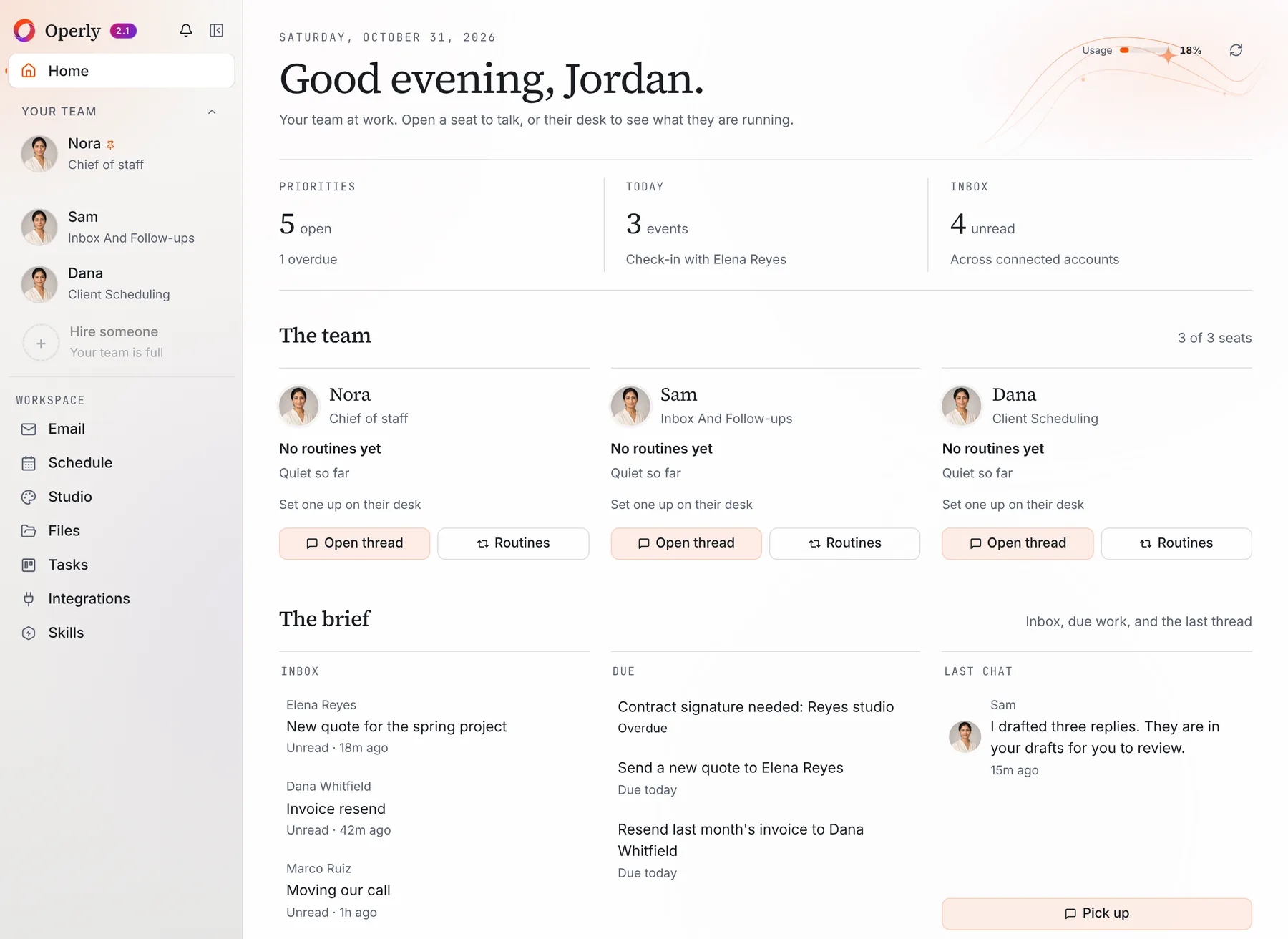
Your day at a glance. Home shows three tiles: Priorities, Today and Inbox, with counts for open tasks, events and unread mail. Under them, The brief lists your latest inbox items, the work that’s due, and your last chat with the team.
An inbox job, with a draft you read first. Tell a team member what you need, for example “Draft a reply to Elena about the new quote. I want to read it first.” You get an email draft in the thread, with the account, the recipient, the subject and the full text.
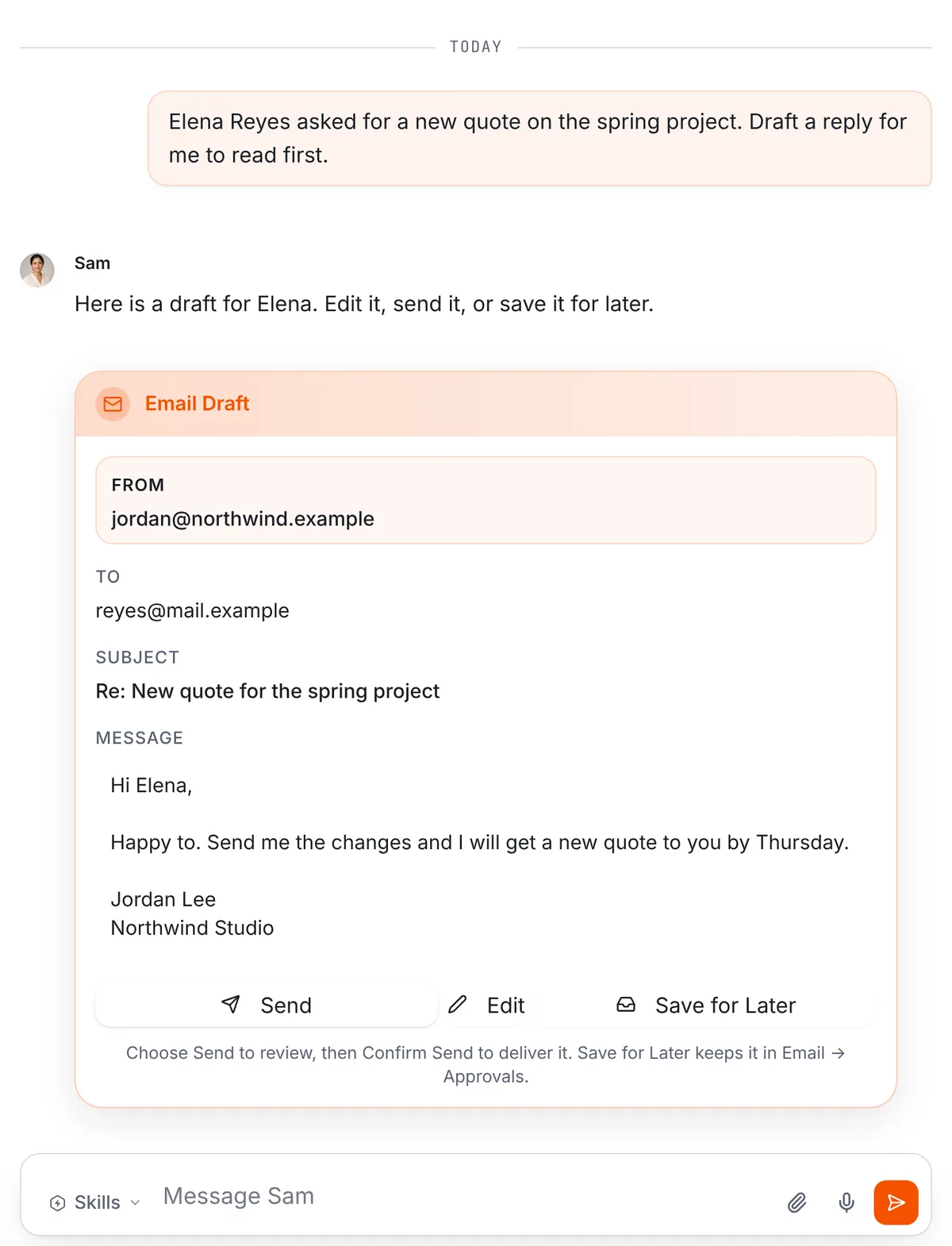
The card says: “Choose Send to review, then Confirm Send to deliver it. Save for Later keeps it in Email → Approvals.” Drafts you save wait in Email, then Approvals.
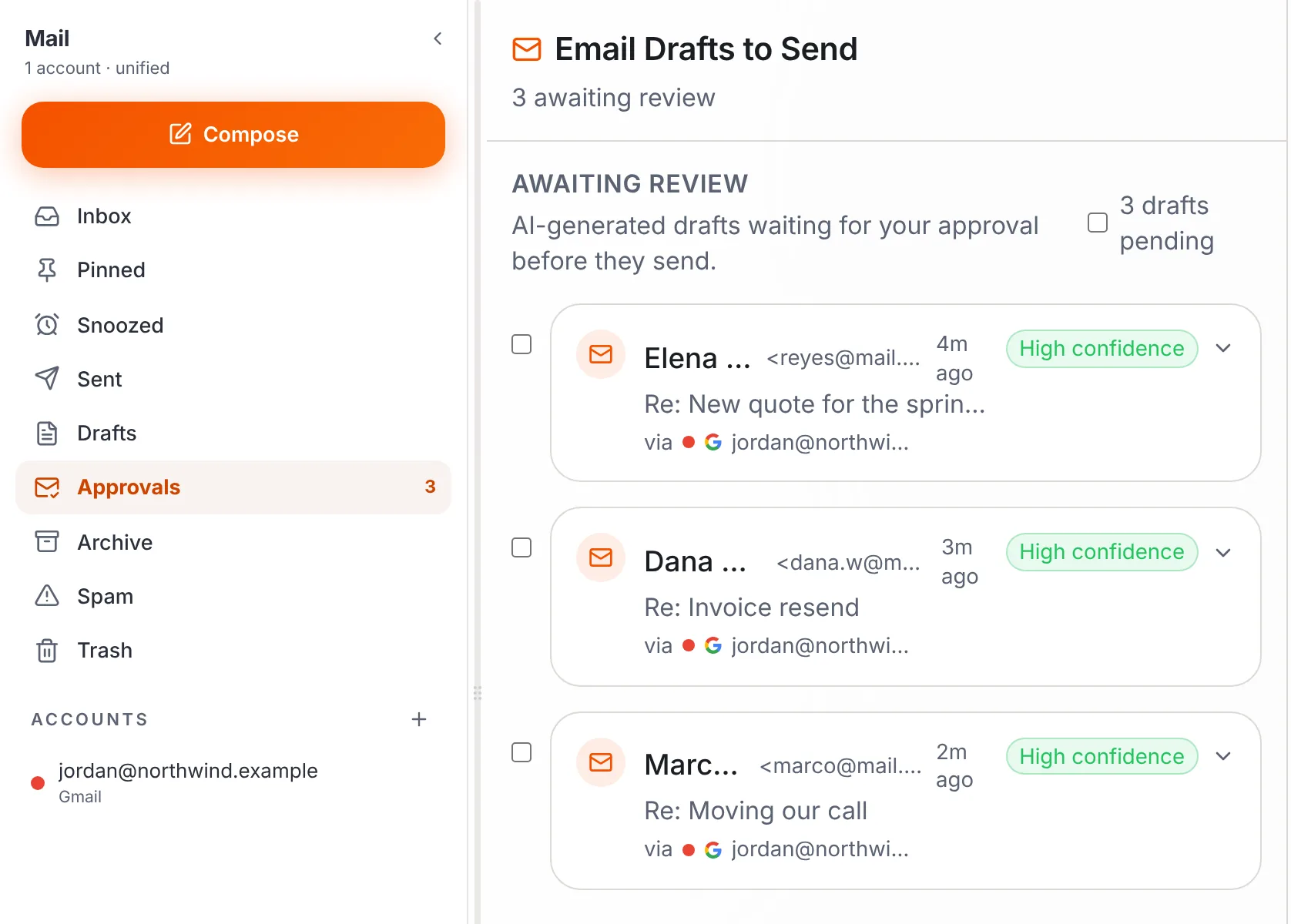
Who sends? Your team carries out the sends you ask for, so ask for drafts when you want to read first. With your chief of staff, say “draft it” when you want to read first.
A calendar job. Ask a team member to add an event and a card shows it first, with Create event and Cancel.
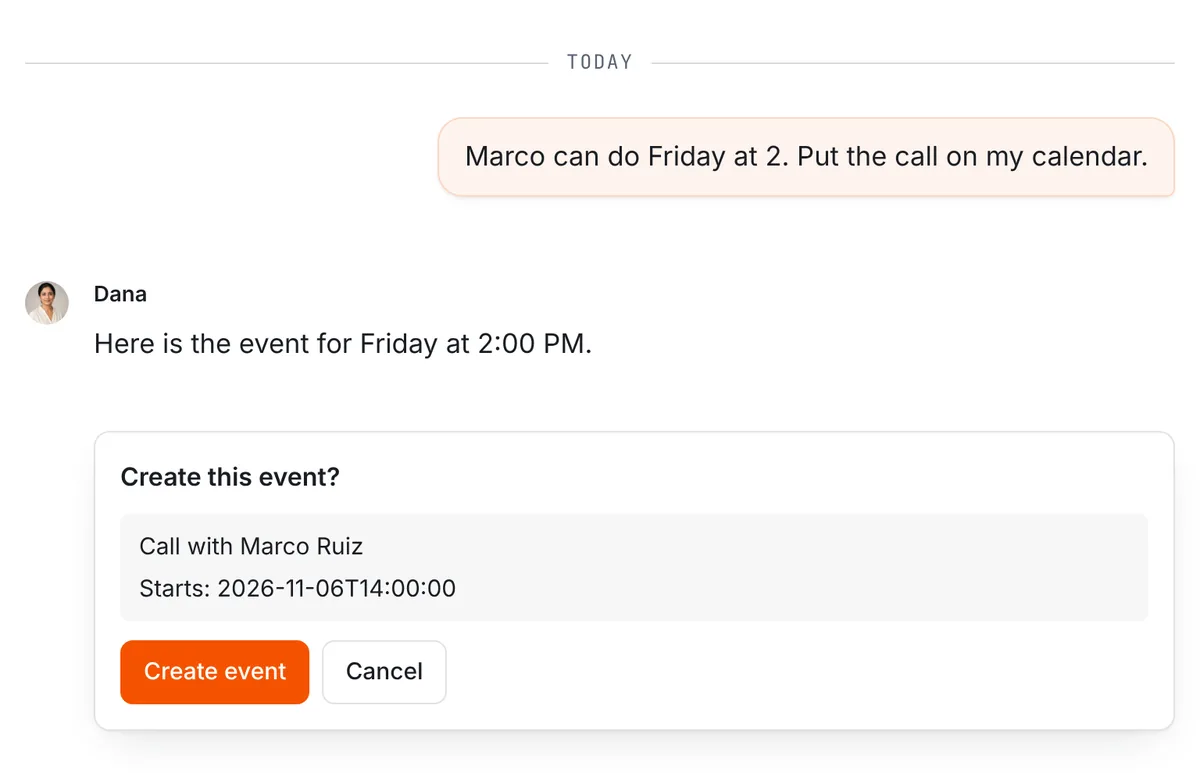
With your chief of staff, say exactly what you want on your calendar and when.
A job that repeats. A routine is a job written as a sentence with a trigger. Open a team member’s desk, find Routines and select New routine. Pick On a schedule, and Write a brief is one of the example actions.
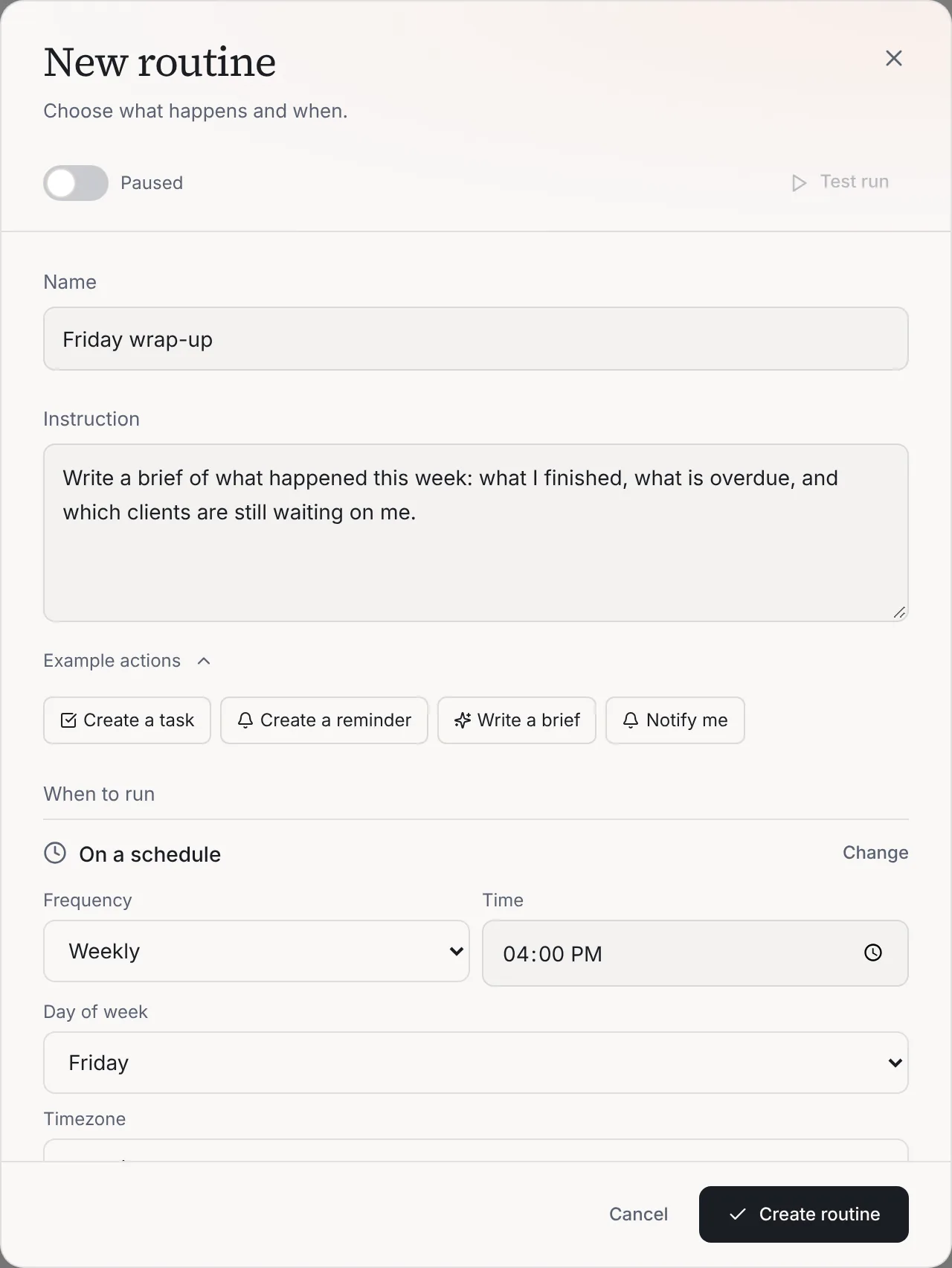
Two ready-made ones fit this job. The Morning Briefing routine runs daily at 7:00 in your workspace timezone and writes a brief of your tasks, calendar and priorities. It sends nothing. The Auto Meeting Prep routine drafts a prep note from the event title, attendees and time only, and doesn’t research the web. Open a routine’s Run history to see what each run did.
Files. In a team member’s thread, use the paperclip to attach a file, then ask your question about it.
Plans. Pro is $50 a month, or $500 a year, for 3 seats. Business is $200 a month, or $2,000 a year, for up to 20 seats and adds premium voice calls with your team and five times the premium usage. Both plans include the workspace computer your team uses for browser work. See pricing.
For what Operly stores and how your data is handled, read the Security page rather than a summary here.
Meet your chief of staff, hand over one job from the list, and read what comes back before it goes anywhere.
What should I try in the first week?
Pick one job, not six.
- Day 1. Connect your email and calendar, or start at Get started. Choose one job from the list above.
- Day 2. Ask for it in one clear sentence. Ask for a draft, not a send.
- Days 3 to 5. Read what comes back. Fix the sentence, not the output.
- Friday. Ask three questions. What finished without me? What needed my judgment? What do I want to hand over next?
- Next week. Add a second job, or put the first on a schedule with a routine.
If the real problem is that everything runs through you, read how to stop being the bottleneck.
Comparing AI agents? See how Operly compares with OpenAI dots, Claude, Muse and Grok Bot.

We build Operly, an AI team for business owners. Your chief of staff hands the work to team members who follow up, draft and organize, and you keep the decisions. About Operly · Watch the demo